
By Jake Dale
Welcome to The J’s 2026 Big Board! Please note that all rankings are player projections and are not based on team fit. Click the prospect to explore their full scouting report.
101Photo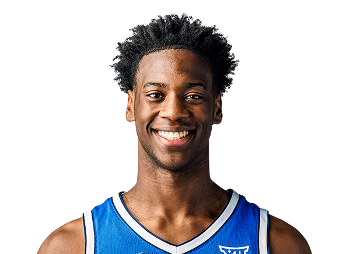 AJ Dybantsa25.5PTS6.8REB3.7AST60.0%TS%
6 ‘9, 7-foot wingspan, 19 years old, averaged 25 points per game at the high major college basketball level. There is no catch; that’s just AJ Dybantsa.
Dybantsa’s in-game fluidity shines through immediately upon watching him play. His ability to create shots at will and his rare athleticism around the rim make Dybantsa the number one home run prospect in this class.
I was worried about how Dybantsa would fare as the only viable option on his BYU offence after sharpshooter Richie Saunders went down with a season-ending injury. Then Dybantsa averaged 32 points on 50% shooting during the final four games of the season.
Dybantsa averaged just over three turnovers per game and didn’t impress on the defensive side of the ball. But with his size and basketball IQ, adjusting to the next level shouldn’t be too difficult.
202Photo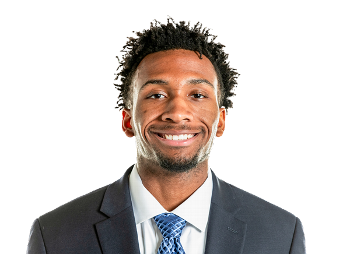 Darryn Peterson20.2PTS4.2REB1.6AST57.8%TS%
Peterson’s freshman season confirmed him as an uber-high-quality scorer with good size. At a closer look, though, it was a more rocky affair. Peterson’s NBA scout season was headlined by cramping, ominous DNPs, and a creatine overdose. Still, he is mocked safely in the top 3 because when he is on the court, the talent pops. DP averaged 20 points in only 29 minutes per game while also shooting 38% from three on nearly seven attempts a night. His prowess from deep, ability to get to the free throw line, and defensive tools make him a top-two talent in this class.
The optimist in me sees the things that Peterson can do at the next level. I see an opportunity for immediate impact on both ends from the moment he first steps on an NBA floor. Still, I also see availability issues from a 19-year-old. Was it a lack of commitment in Lawrence? Constant miscommunication with Bill Self? Or will Peterson also be sitting out on a Monday night against Charlotte on League Pass? If he were able to be on the court consistently, he would be my favourite prospect in this class; sadly, I can’t guarantee that in any sort of confidence.
Peterson struggled with turnovers while having abysmal passing numbers. Though, it is called a SHOOTING guard for a reason. Peterson’s motor isn’t an immense issue, but his athleticism pops considerably less than his high school tape from a year prior.
303Photo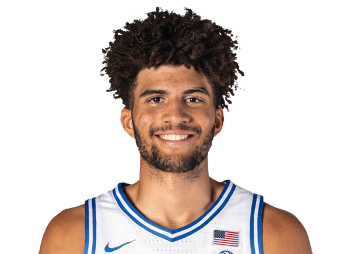 Cam Boozer22.5PTS10.2REB4.1AST65.3%TS%
In a lesser class, Cam Boozer would be a shoe-in number one overall pick. The fact that any franchise would be lucky to have him still rings true.
Boozer is a proven scorer, rebounder, and defender at the college level. He has shown leadership abilities, efficiency, and playmaking prowess all at only 18 years of age (19 in July).
The 2025-2026 AP Player of the year, John Wooden Award Winner, Naismith Award Winner, and consensus All-American averaged 22.5 points and 10.2 rebounds. Simply put: Cam Boozer was the most dominant player in college basketball at 18 years old.
The main question for Boozer is a familiar one for collegiate superstars: How will his game translate to the next level? Modern NBA superstars have an uncanny mix of speed and height; it’s these categories where Boozer struggles. He isn’t an incredible athlete by NBA standards, and his bruiser playstyle may be difficult to replicate in the NBA due to his 6’8″ frame.
The good news is Boozer happens to be really good at putting the ball through the hoop. He excelled at Duke because of his offensive versatility and blossoming playmaking. In order to succeed at the next level, Boozer will be required to resemble Kevin Love and Draymond Green more than Shaquille O’Neal. His good assist-to-turnover rate and 39% mark from the three will help with that.
Boozer’s ceiling may not meet the heights of Dybantsa or Peterson, but a high-quality NBA talent who can have immediate impact should be coveted nonetheless.
404Photo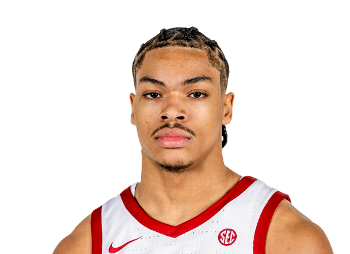 Darius Acuff23.5PTS3.1REB6.4AST60.4%TS%
You don’t pass on special. Darius Acuff lit the college basketball world on fire during his freshman season in Arkansas and was the best scorer in the college world.
Acuff will be 19 years old upon his NBA debut. Also, his Arkansas coach John Calipari is known for his guard development. In his many years at the college level, he has coached Shai Gilgeous-Alexander, Derrick Rose, John Wall and so many more.
Acuff is lethal from all three levels. While averaging 23.5 points and taking home the SEC player of the year, he shot 48% from the field. On nearly six three-point attempts per game, Acuff shot 44% from deep as the undisputed number one option. Acuff was not only in the 96th percentile on 3pt%, but he was also in the 91st percentile on creating shots at the rim. Even further, the kid from Detroit found endless ways to get his teammates involved, averaging 6.4 assists per game and placing in the 91st percentile on rim assists created. All of this combined to make Acuff the most offensively impactful player on the basis of OBPM (offensive box plus minus).
Acuff found some sceptics with his size, yet his 6’2″ frame was unexaggerated, as he measured at that exact mark without shoes.
Still, unlike the top three, there is a catch for Acuff. He was no help to the 60th-ranked Arkansas defense in 2026 as he struggled to defend. His size doesn’t help but also isn’t the main culprit. Acuff’s STOCK% (steal%+block%) of 2.2 and defensive tape make it clear as to why some have Acuff falling down their boards. Seriously, the freshman put up a 0 in the season-long measured defensive impact (DBPM), which ranked in the 9th percentile.
Darius Acuff is a wildly unique talent because he is simultaneously the best offensive talent and worst defensive talent. My point of discretion is that teaching Acuff to play defense at a league-average mark should be easier than teaching other prospects how to be a generational scorer.
505Photo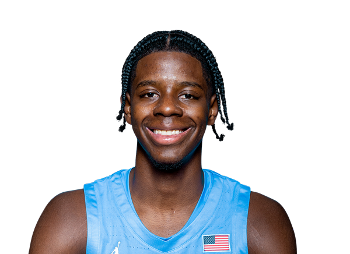 Caleb Wilson19.8PTS9.4REB2.7AST62.6%TS%
Although an often overused term, Caleb Wilson is a freak athlete. Wilson turns 20 in July, but for all intents and purposes, he falls into the top five of young phenoms. Wilson measured in well while also moving well for his size in speed and agility tests.
Wilson’s freshman season in Chapel Hill was cut short due to back-to-back injuries on his wrist and thumb. Before then, Wilson excelled, averaging 19.8 points and 9.4 rebounds while shooting it at an efficient 61% on two-pointers. Wilson only took 27 three-point attempts all year, making just seven. Though, he still found a way to be incredibly impactful. 97th percentile BPM, a 123.1 offensive rating, and nearly 3 STOCKS per game highlighted Wilson’s shortened 2025-2026.
I thought Caleb Wilson had a tonne to prove in March. A March Madness run or a few standout performances could’ve propelled him into top-three conversations in this class. I have Wilson at fifth because I find his archetype of player difficult to predict. His defensive impact should be there on day one, but how can we rely on deep mid-range jumpers and rim percentage over smaller college defenders? Wilson can have a tonne of success in this league, but in my eyes there is a tougher road to stardom than the four ahead of him. The new-age NBA is infatuated with shooting, no matter how gadgety your athletic tools are. 27 attempts from three just doesn’t cut it, even if his jumper looks fine on tape.
606Photo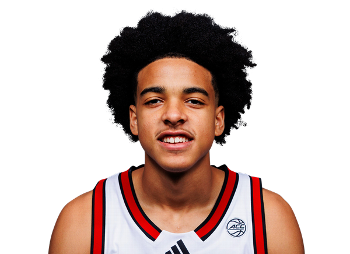 Mikel Brown Jr.18.2PTS3.3REB4.7AST57.7%TS%
Mikel Brown Jr is the perfect summation of the modern NBA’s point guard. He has a great frame at 6’5 and holds the speed and agility of a prospect 3+ inches shorter. Brown’s three-point diet of nearly 8 attempts per game while being an explosive dunker at the rim matches modern NBA standards. I’m taking a flyer by having Brown over some of his constituents, but I think he’s worth it. Even though he only played 21 games in college, the flashes of being an exceptional NBA guard were apparent. For Mikel, a tonne of his game exists on his frame and what the eye test has shown. Brown averaged 18.2 points and 4.7 assists while shooting 34.4% from three.
707Photo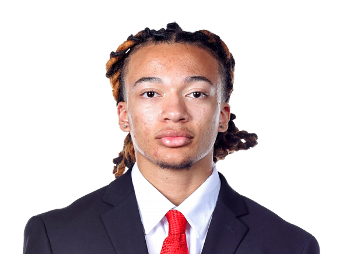 Kingston Flemings16.1PTS4.1REB5.2AST56.3%TS%
Flemings poses an interesting question that we must answer: production or projection? What I mean by that is how do we weigh a player’s college statistics versus trying to guess the player they will become at the professional level? Kingston Flemings and Darryn Peterson were the only two who ranked in the top 95th percentile in offensive and defensive impact as freshman guards. The Houston freshman averaged 16.1 points and 5.2 assists while being one of the most impactful players in the nation on both sides of the ball. He will still only be 19 years old upon his NBA debut and, in my eyes, will outshine his 6’2″, 183 lb frame. Plus, point guards who can assist the ball without turning it over will always have a market in the league. My main gripe: his shot diet is heavily midrange-reliant. That plays poorly in a league that continues to stray away from anything of the sort.
808Photo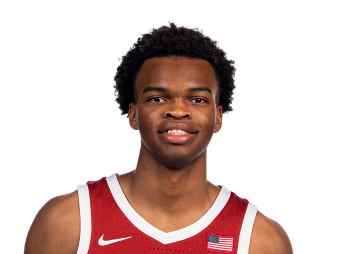 Ebuka Okorie23.2PTS3.6REB3.6AST58.9%TS%
Life’s short, so I’m taking the risk on Ebuka Okorie. Okorie played his entire season at Stanford at 18 years of age and averaged 23.2 points per game. The freshman was one of the most offensively lethal players in college basketball and did it all in a power conference. Okorie didn’t amaze with his 3.6 assists per game, but he also didn’t turn the ball over, averaging under 2 per game. There is obviously room to grow on the playmaking part of his game, but he has so much time to do so. Okorie shot 35.4% from three on nearly 10 attempts per game. Meanwhile, he made his money at the rim. The 99th percentile in unassisted dunks is all you need to know. No NBA GM will take Okorie this high because of his 6’1″ stature, but age and production SHOULD do all the talking.
909Photo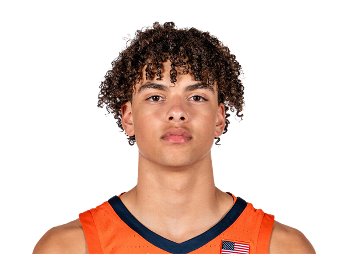 Keaton Wagler17.9PTS5.1REB4.2AST59.6%TS%
Unlike a hefty proportion of this class, Keaton Wagler was not a blue-chip prospect, nor was he seen as someone who could’ve gone one-and-done. Yet, here we are. Wagler is a tall guard who will be 19 upon his NBA debut. During his lone season in Champaign, Wagler averaged 17.9 points, 5.1 rebounds, and 4.2 assists while leading the Illini to a Final Four. Wagler shot an unbelievable 39.7% from three on a whopping 11.2 attempts per game. It was that efficient shot-making from deep that put him in the 95th percentile for offensive impact. Wagler isn’t astonishing on defense, but his quality 6’5″ frame helped him be an above-average defender on the year. Wagler plays as a true combo guard who will need to work on playmaking and self-creation if he wants to be an on-ball guard at the next level. Still, Wagler is an impressive shotmaker with great size.
1010Photo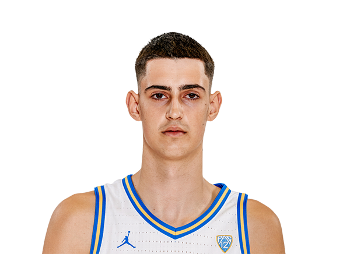 Aday Mara11.8PTS6.8REB2.4AST65.7%TS%
The 7’3 monster from Michigan was the draft’s biggest riser because of his March Madness campaign that ended in a national championship. Before then, he was seen as a low-end first-rounder who was likely to return to college. Mara’s defense was never an issue. His massive frame feels Wembanyama-esque, but even as a raw NBA prospect, Mara boasted 2.6 blocks per game and 99th percentile adjusted defensive impact. His movement feels clunky at times, but that is pretty par for the course for most guys his size. He is an efficient scorer who shot 81.1% from around the rim, and his offensive game can only grow from here. The Spanish big man can also dish it out with the best centers with his 19% assist rate in 2026. A 7’3 player with this much skill means he is a few quality development years away from being a problem.
1111Photo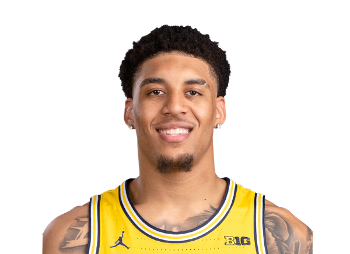 Yaxel Lendeborg15.1PTS6.8REB3.2AST64.6%TS%
Lendeborg excels on both ends of the ball. He was the go-to scorer on a national championship team and has the impact numbers to show for it. He is a talented 6’9″ stretch four with shooting prowess (37.2% from three in 2026) and can find his teammates quality looks without turning it over (3.1 AST/TO). Also, his massive 7’3″ wingspan makes him a STOCK machine that can have immediate impacts on an NBA defense. With all that in mind, he should be a top-5 pick, if not for the fact that he’s 23 years old. NBA scouts are scared of age, but I’m not. I actually don’t even think Lendeborg has a lower ceiling than some of his peers in this 10-14 range. He still has room to grow on the offensive side of the ball and has the build to do so.
1212Photo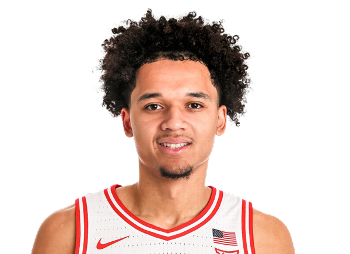 Brayden Burries16.1PTS4.9REB2.4AST61.6%TS%
When the Arizona Wildcats were 23-0 to start their season, I was seemingly high on Brayden Burries as a prospect. Since then, my stock in him has fallen, but the tools are still there. Burries is a gadgety scorer who effectively finds holes in good defenses. To pair, he is an excellent defender for his size. Out of this lottery group I see Burries as having the lowest ceiling because of his pedestrian rim % and AST %. Still, the freshman shot 39.1% from three on nearly nine attempts per game. In a league that loves 3-D guards and wings, Burries should be malleable enough to fit in any NBA system.
1313Photo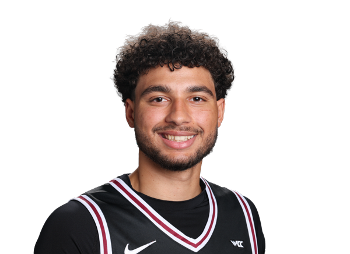 Allen Graves11.8PTS6.5REB1.8AST61.5%TS%
The last two Santa Clara Broncos to be taken in the top 15 of the NBA draft are Steve Nash and Jalen Williams. Is Allen Graves the next Bronco headed for All-NBA stardom? Well, the advanced analytics say so. Neither the eye test nor his traditional averages tell the story of a low-level NBA prospect. His slow style of play and averages of 11.8 points and 6.5 rebounds versus a mid-major strength of schedule are not exciting. However, his 97th percentile BPM, 99th percentile creation turnover percentage, and 99th percentile offensive rebounding percentage show more under the hood. In a more traditional sense, Graves shot 40.7% from three, and as a nearly 6’8″ 20-year-old, he showed great ability to be able to pass the ball without turning it over. In a world where I have a higher risk tolerance, I would put Graves in my top six. Thus, weighing the risks of how his scoring may translate, I’ll keep him at the end of the lottery. Seriously though, he can do everything.
1414Photo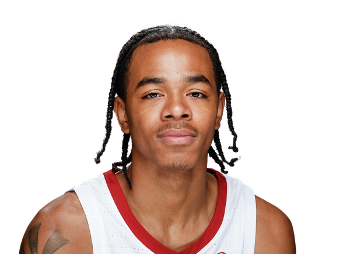 Labaron Philon22.0PTS3.5REB5.0AST62.6%TS%
At face value, Labaron Philon is a quality scorer at all levels of the floor. He plays with good offensive pace and shoots nearly 40% from three on over 10 attempts per game. All of this was on an Alabama team that had a successful regular season and eventually lost to the national champions in March. Deeper though, Philon’s 6’2″ frame and poor defense don’t bode well with a rough NBA combine performance. Philon’s lane agility, shuttle run, and vertical weren’t in the top half of the attending NBA prospects. His tape bears resemblance to Shai Gilgeous-Alexander’s in some ways but has a much less developed passing game and plenty of work to do with his around-the-rim efficiency. Philon could very well end up as a home-run prospect for any team that can limit his turnovers and maximise his offensive creation skills. Still, he lacks too many NBA tools to be considered a blue-chip prospect.
1515Photo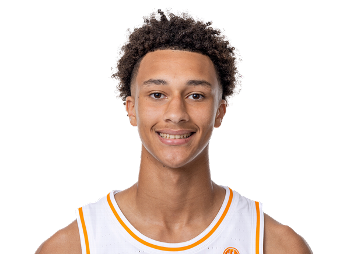 Nate Ament16.7PTS6.3REB2.3AST53.4%TS%
Some people in the larger NBA media are seemingly high on Nate Ament in this class. I enjoy being happy-go-lucky on all prospects, but Ament isn’t all that exciting to me. He is still a 15 for me because he is a 19-year-old, 6’9″ wing that has shown flashes of offensive brilliance. The key word in that sentence is ‘flashes’. Ament’s tape and efficiency stats are less than ideal and show greater cracks than some may have you believe. The freshman volunteer was in the bottom 3rd percentile in 2pt% and the 23rd percentile in total true shooting %. To pair, his assist and turnover figures were exactly even at 2.3 per game. On top of all of that, despite a nearly seven-foot wingspan, he is just barely above average on the defensive end of the ball and doesn’t get STOCKS at an exceptional rate. If an NBA team wants to spend all of their effort on developing Ament, he has a chance of working out. Granted, that’s an unlikely reality.
1616Photo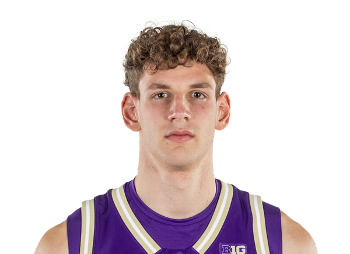 Hannes Steinbach18.5PTS11.8REB1.6AST63.6%TS%
At 20 years old Steinbach had a great freshman year at Washington. Steinbach has a good build and fluid playstyle. The combination of offensive efficiency (90th percentile true shooting) and offensive rebounding (95th percentile OREB%) is a lethal one. His three-point shooting and defense could use some work, but the vision for how Steinbach can fit into modern NBA offences is clear.
1717Photo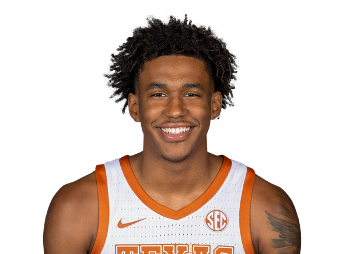 Dailyn Swain17.3PTS7.5REB3.6AST63.3%TS%
Swain grew into the number one option in Sean Miller’s Texas offence as his sophomore season went on. Swain began his NBA prospect journey as a raw prospect but has turned into a proven scorer. Swain has the wingspan and quickness to be a problem on the defensive end. Pairing that with Swain already being a great cutter and rim scorer, a winning culture should love to have the two-way upside of Swain. Can he develop a three-point shot at large?
1818Photo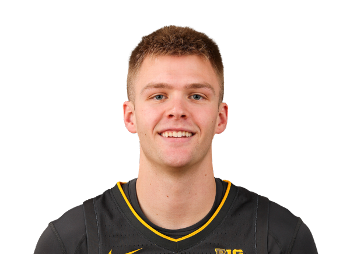 Bennett Stirtz19.8PTS2.6REB4.4AST60.7%TS%
Stirtz is an incredible shooter and proven scorer. His ability to self-create and get himself open makes him an attractive piece to plug into an NBA system. Stirtz is nearing 23 years old and has a less than ideal build.
1919Photo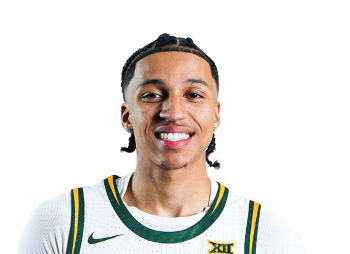 Cameron Carr18.9PTS5.8REB2.6AST61.8%TS%
Carr’s stock skyrocketed during the NBA combine. Normally, I wouldn’t buy into the hype, but Carr showed good efficiency during his lone season in Waco. His build and scoring upside make him an intriguing project.
2020Photo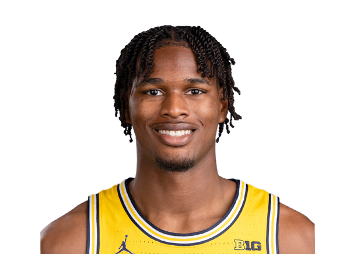 Morez Johnson Jr.13.1PTS7.3REB1.2AST67.7%TS%
2121Photo Karim Lopez11.9PTS6.1REB1.9AST58.5%TS%
2222Photo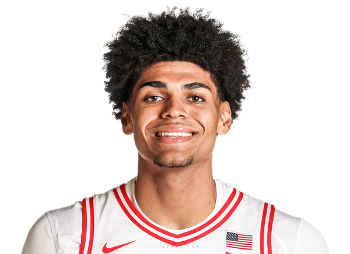 Koa Peat14.1PTS5.6REB2.6AST55.7%TS%
2323Photo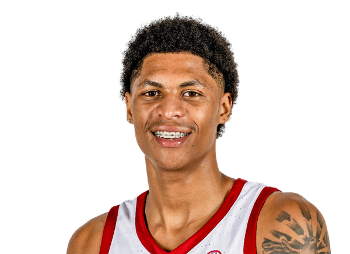 Meleek Thomas15.6PTS3.8REB2.5AST55.9%TS%
2424Photo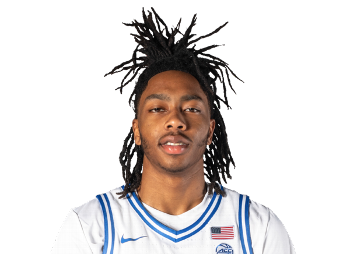 Isaiah Evans15.0PTS3.2REB1.3AST59.0%TS%
2525Photo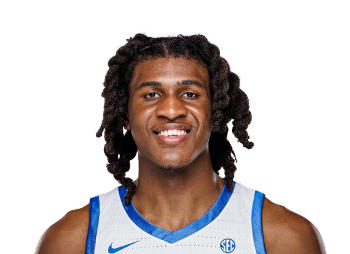 Jayden Quaintance5.0PTS5.0REB0.5AST49.6%TS%
2626Photo Christian Anderson18.5PTS3.6REB7.4AST62.6%TS%
2727Photo Zuby Ejiofor16.3PTS7.3REB3.5AST60.9%TS%
2828Photo Joshua Jefferson16.4PTS7.4REB4.8AST56.0%TS%
2929Photo Ryan Conwell18.8PTS4.8REB2.7AST56.6%TS%
3030Photo Richie Saunders18.0PTS5.8REB2.1AST63.2%TS%
From Professional Sports to College Athletics, The J has it all.